Durable Non Slip Socks for Reformer: 2026 Guide

Last Updated: October 23, 2026
Quick Summary
Durable non slip socks for the Reformer use full-sole silicone grip and a cotton, nylon and spandex blend that holds shape and tack through repeated washing. Judge them by sole coverage, fit retention and cost per wear, not first-wear feel.
- Full-sole silicone holds tack better than partial or smooth grip designs on the carriage.
- Rotate three pairs so each sock rests a full day between sessions and keeps cuff tension.
- Wash inside out at 30°C or lower, skip fabric softener and air dry flat.
- Replace socks when silicone feels smooth, the cuff loses tension or the heel thins.
- The ankle cut spans EU 38-46, the widest size range in the range.
Table of Contents
- Why Durable Non Slip Socks Matter on the Reformer
- Quick Comparison: Reforman Grip Socks at a Glance
- How We Evaluated These Durable Non Slip Socks
- The Best Grip Socks for Reformer Pilates
- Pilates Socks with Full Sole Grip: Why Coverage Decides Traction
- Fit, Cuff Style and Preventing Sock Rotation
- Yoga Socks vs Pilates Socks: What Actually Changes
- How to Wash Pilates Grip Socks So the Grip Lasts
- Cost Per Wear and When to Replace Your Socks
- Frequently Asked Questions
Why Durable Non Slip Socks Matter on the Reformer
A grip sock that fails mid-class is worse than no sock at all. When silicone starts peeling or the fabric loses its stretch, your foot slides on the carriage during footwork, and you spend the rest of the session bracing instead of moving. That is the problem durable non slip socks are built to solve.
The market reflects that demand. Dataintelo's Pilates grip socks market report estimates the category at $1.8 billion in 2025, projecting $3.2 billion by 2034 at a 6.6% CAGR. Growth like that invites shortcuts, and plenty of brands take them.
Below, we break down what separates a sock that lasts from one that quits after eight washes.
Quick Comparison: Reforman Grip Socks at a Glance
Every pair in our range uses the same full-sole silicone construction and the same cotton, nylon and spandex blend. The differences are cut, fit range and design.
| Style | Price | Cut | Size Range | Best For |
|---|---|---|---|---|
| Ankle Pilates Grip Socks | £7.99 | Ankle | EU 38-46 | Wider feet, first pair |
| Classic Pilates Grip Socks | £8.99 | Crew | EU 39-44 | Daily Reformer use |
| Palms, Wave, Foothills, Laters, Bro, Dude | £8.99 | Crew | EU 39-44 | Studio to street |
| Wildground Collection Bundle | £20.00 | Crew | EU 39-44 | Three-pair rotation |
| The Millennial Edit Bundle | £20.00 | Crew | EU 39-44 | Three-pair rotation |
The ankle cut covers the widest size range in the range, which matters if you sit at either end of the sizing scale.

How We Evaluated These Durable Non Slip Socks
Grip is easy to claim and hard to prove. Most comparisons rank socks on first-wear feel, which tells you almost nothing about month six. Sole coverage, fit retention after washing, fabric recovery, and cost per wear across a realistic replacement cycle are better indicators of durability.
DeadSoxy's 2026 brand comparison is a useful reference point here. It compares eight brands on grip, durability, comfort and value, and its own TrueStay™ grip carries a claim of holding through 100+ wash cycles alongside a 111-day guarantee. Manufacturer claims are not independent test results, but they set the bar the category now competes against.
A pair should hold its shape and its grip through a normal studio schedule, not a handful of sessions.
Full-sole silicone with a dotted pattern can hold tack better than partial or smooth grip designs, and socks that are rotated between sessions can retain cuff tension better than those worn on consecutive days.
The Best Grip Socks for Reformer Pilates
The right pair depends on your foot width, your class frequency and whether the sock needs to work outside the studio. Here is how the range breaks down.
Ankle Pilates Grip Socks: The Entry Point
At £7.99, the ankle cut is the lowest-risk way into the range. Full-foot silicone covers ball, heel and arch, and the engineered stretch fits EU 38-46, which is broader than most one-size offerings manage.
The ankle height suits anyone who runs warm through the calf or prefers a lower profile under leggings. It is also the pair we point wider-footed customers toward first, because the shorter cuff removes a common pressure point.
Classic Pilates Grip Socks: The Studio Staple
The Classic is the pair most people end up buying twice. A dotted silicone sole pattern grips the carriage, the studio floor and gym surfaces, and the cotton, nylon and spandex blend is breathable and moisture-wicking without going thin.
Fit runs EU 39-44. If you are between sizes at the top end, size up to the ankle cut instead.
Wildground and Millennial Edit Bundles: Three Pairs, £20
Two bundles, three pairs each, £20. The Wildground Collection pairs Foothills, Palms and Wave with botanical embroidery on the cuff. The Millennial Edit pairs Bro, Dude and Laters with script cuffs. Both use the same full-sole silicone grip and crew cut.
Buying three singles costs £26.97, so the bundle saves £6.97. More usefully, a three-pair rotation means each sock rests between sessions, which extends fabric life.
Pilates Socks with Full Sole Grip: Why Coverage Decides Traction
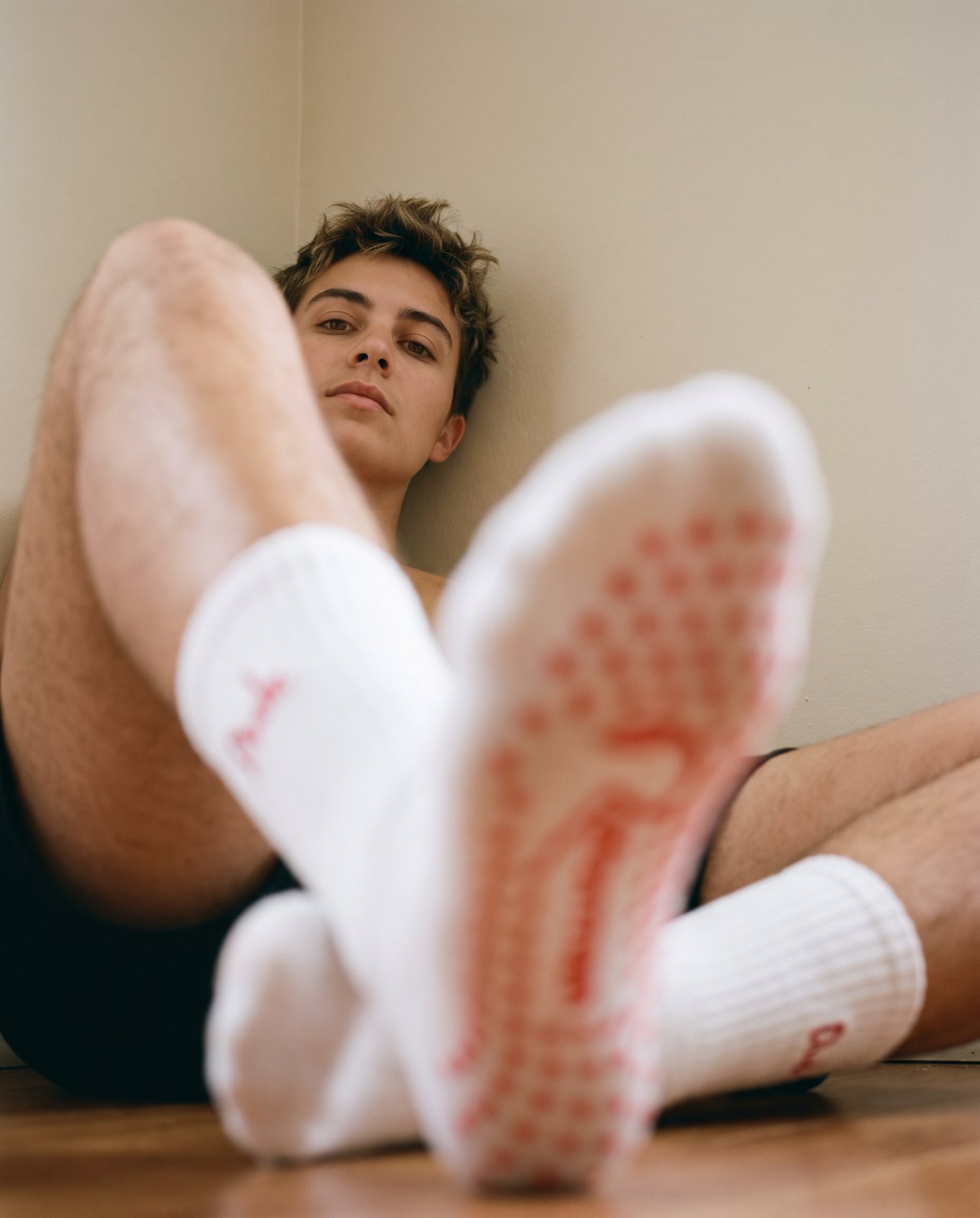
Pilates socks with full sole grip can provide reliable traction on the Reformer because traction is only as good as the smallest contact patch. Sokisahtel's grip socks guide makes the same distinction: full-sole coverage suits Reformer work, while partial grip can be enough for mat and barre.
Ankle Pilates Grip Socks | Non-Slip, Full Sole | Reforman →
Think about where your foot actually loads. Footwork presses through the ball and heel against the footbar. Lunges and planks load the arch and outer edge. A dotted heel patch does nothing for the arch, and a partial sole leaves the carriage free to shift under you during transitions.
Fit, Cuff Style and Preventing Sock Rotation
Sock rotation often comes from fit. A sock that is too loose at the arch can twist around the foot no matter how much silicone sits underneath. Engineered stretch that holds tension across the midfoot and a cuff that stays put without pinching can help prevent this.
Cuff height is personal. Ankle styles sit low and suit wider feet and warm rooms. Crew styles cover the ankle and stay put under leggings. Ribbed cuffs add grip at the top of the sock, which helps if you have a narrow ankle and find crew socks slide down.
Sizing is where most returns happen. Our ankle cut spans EU 38-46; the crew styles span EU 39-44. If you are a half size at the top of a crew range, take the ankle cut. But size range alone does not tell you how a sock will fit your foot shape. Here is what to consider:
- Wide feet: The ankle cut's broader stretch accommodates a wider forefoot without bunching at the toes. If you normally size up in shoes to avoid pressure, start with the ankle style.
- Narrow heels: A crew sock with a ribbed cuff can help hold the heel in place, which can be beneficial during footwork. Look for a snug midfoot and a cuff that sits above the ankle bone.
- High arches: Socks with a defined arch band, a tighter knit zone across the midfoot, can stay put better than straight-tube designs. Our full-sole silicone extends into the arch, which adds grip.
- Between sizes: If you are at the top of a range, size up rather than down. A slightly looser sock can be adjusted; a tight one will stretch at the heel and lose shape.
A common pattern is that rotation happens when the sock is too long for the foot, not too short. If your heel sits forward of the heel cup, the excess fabric can bunch under the arch and the silicone may not make full contact. Check that the heel seam sits directly under your heel bone before you start moving.
Yoga Socks vs Pilates Socks: What Actually Changes
Yoga socks and Pilates socks differ mainly in grip coverage and cuff design, not in fabric. Yoga socks often use a partial sole or open-toe construction, because mat work rewards toe spread and feel. Reformer work rewards full-surface traction and a secure midfoot, so Pilates grip socks typically run a fuller sole and a closer fit.

If you do both, a full-sole Pilates sock can be suitable for yoga. A light yoga sock may slide on a carriage.
BBC Good Food's tested Pilates socks review tested both toe-sock styles for Reformer classes and cushioned styles for mat work, which reflects the split accurately.
How to Wash Pilates Grip Socks So the Grip Lasts
Wash grip socks inside out on a cool cycle, skip the fabric softener, and air dry. Heat and softener are what kill silicone grip and spandex recovery.
- Turn socks inside out before washing
- Use a cool cycle, 30°C or lower
- Skip fabric softener entirely
- Avoid the tumble dryer
- Air dry flat, away from direct heat
- Wash separately from velcro or zips
Fabric softener coats silicone and reduces tack. Dryer heat degrades the spandex that holds the sock's shape. Do both and a pair that should last a season will feel slack within weeks.
Cost Per Wear and When to Replace Your Socks
Cost per wear is the number that actually matters. A £7.99 ankle pair worn twice a week for six months works out at roughly 15p per session. A cheaper pair that loses grip in two months costs more per wear despite the lower ticket price.
Replace when the silicone feels smooth rather than tacky, when the cuff no longer holds tension, or when the heel fabric thins enough to go translucent. Any one of those signals is enough.
A three-pair rotation at £20 spreads wear and pushes replacement further out. That is the practical case for the bundles, not the design.
Frequently Asked Questions
How can you tell whether Pilates grip socks are durable?
Look at three things: the grip material, the fabric blend and the construction. Silicone grips applied across the full sole tend to outlast small printed dots, and a cotton, nylon and spandex blend holds its shape through repeated washing better than all-cotton. Check whether the brand states a wash-cycle claim, and read reviews that mention grip after several months. Reforman's cotton, nylon and spandex blend is built to hold shape wash after wash, which is the practical marker of durable non slip socks.
Do grip socks lose their grip after washing?
They can if they are washed hot or tumble dried. Heat degrades silicone and shrinks stretch fabric, which pulls the sole out of shape and reduces contact with the reformer. Wash at 30 degrees or lower, turn them inside out, skip fabric softener and air dry. DeadSoxy claims its TrueStay grip holds through 100+ wash cycles, which shows the claim is possible, but the care routine is what protects any pair.
Are yoga socks suitable for Reformer Pilates?
Sometimes, but the demands differ. Yoga socks are usually designed for mat work, where partial grip under the ball and heel is enough. A reformer carriage and footbar ask for more: full-sole grip coverage holds through lunges, planks and balance work where the whole foot is loaded. If you split your week between mat and reformer, a Pilates sock with full sole grip is the safer single purchase.
How often should you replace Reformer grip socks?
Replace them when the silicone starts peeling, the heel cuff loses elasticity, or you notice rotation during footwork that did not happen before. For someone training three times a week, that typically lands somewhere between nine and eighteen months depending on fabric quality and care. Cost per wear is the honest measure: a £8.99 pair that lasts a year of regular sessions works out cheaper than two £5 pairs that fail in three months.
Can you do reformer without grip socks?
Some studios allow regular socks, and Apolla Performance notes that grip is optional while pointing out that plain socks slide on smooth surfaces and offer no arch support. The practical risk is on the carriage and footbar, where a slipping foot changes how much control you have. If your studio permits bare feet or standard socks, that is your call, but full-sole non slip socks remove the variable entirely.
Durable non slip socks for reformer work are a small purchase with an outsized effect on how stable you feel through every transition. If your current pair has gone smooth underfoot, the range is built to fix that: full-sole silicone grip, a breathable cotton, nylon and spandex blend, and gender-neutral designs that work from studio to street. Shop the collection and start with the ankle cut if you are unsure of sizing.
