Melisoles vs Pointe Studio Grip Socks: A 2026 Review

Table of Contents
- Melisoles vs Pointe Studio Grip Socks: What This Review Covers
- How We Compared These Grip Socks
- Grip Performance and Slip Resistance
- Comfort, Fit and Sizing
- Durability and Wash Testing
- Best Pilates Grip Socks for Different Workouts
- Grip Socks for Reformer Pilates: What to Look For
- Verdict: Which Grip Socks Suit You Best
- Frequently Asked Questions
Last Updated: October 12, 2026
Melisoles vs Pointe Studio Grip Socks: What This Review Covers
Grip socks have become standard kit in studios, and the Melisoles vs Pointe Studio comparison is one of the most common searches we see from people buying their first or second serious pair. This review from Reforman breaks down how both brands approach grip, fit and durability, and where each one suits a different kind of wearer.
Here is the honest version up front: neither brand is universally better. The right pair depends on your foot shape, how often you train, and whether you want a sock that works only on the Reformer or one that carries you from studio to street.
Most reviews of grip socks stop at first impressions. We are more interested in what happens after twenty washes, when the silicone has either held its pattern or started to peel. That is the difference between a sock you rebuy and a sock you replace.
How We Compared These Grip Socks
We assessed both brands against the same criteria: grip pattern and coverage, fit across the full size range, comfort during footwork, and how the fabric holds up after repeated washing.
What We Tested and Why It Matters
Grip is the first thing to check, but it is not the only thing. A sock can grip well and still fail you if it migrates at the heel mid-class or bunches under the toes during transitions.
Our criteria, in order of weight:
- Full-sole grip coverage rather than scattered dots at the heel and ball
- Fit across the size range, including wider feet
- Heel and cuff retention during reformer transitions
- Fabric behaviour after washing: pilling, shrinkage, stretch recovery
- Versatility beyond the studio floor
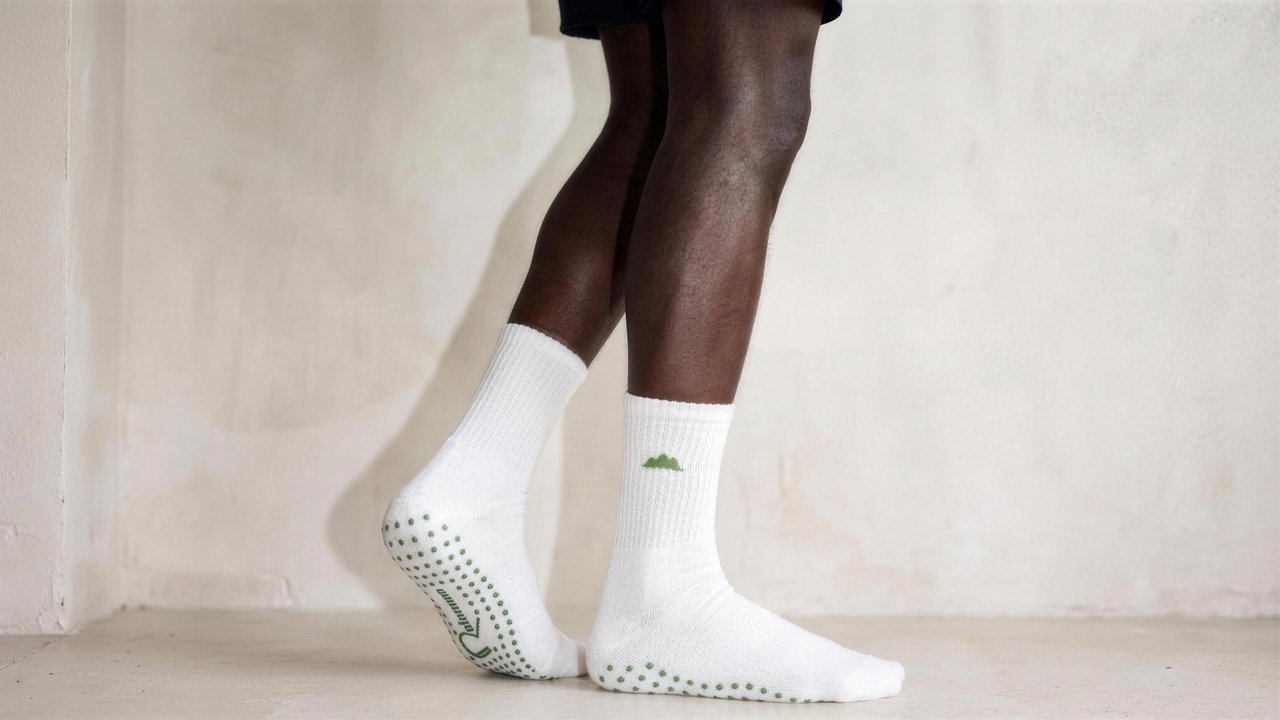
If you want a wider view of what separates a good sock from a poor one, the Chartered Society of Physiotherapy's guidance on footwear and stability is a useful starting point on why foot contact matters during exercise.
Grip Performance and Slip Resistance
Grip performance comes down to two things: how much of the sole is covered, and whether the silicone stays put once your foot is warm. Socks with grip only at the heel and ball tend to slip during side-to-side work, because the midfoot has nothing to hold.
A full-sole silicone pattern gives you contact across the whole foot, which matters most in reformer footwork and standing leg work. Coverage beats density here: a smaller number of well-placed grips across the full sole outperforms a heavy cluster in one zone.
Comfort, Fit and Sizing
Fit is where most grip socks quietly fail. A sock that claims one size fits all will bunch at the toes on a wider foot and roll at the heel on a narrower one. Neither is a comfort problem you can ignore mid-class.
Look for engineered stretch rather than a flat fabric blend. A sock built to flex across a defined size range holds its shape far better than a generic stretch knit. Five-toe construction also helps, because each toe sits in its own channel instead of compressing together.
- Wider feet: prioritise engineered stretch over one-size claims
- Narrow feet: check the ankle cuff, which should sit flat without digging
- Long sessions: moisture management matters as much as grip
Durability and Wash Testing
Durability is the least glamorous criterion and the one that decides value. The failure points are predictable: silicone that lifts at the edges, fabric that pills under the heel, and cuffs that lose elasticity.
Wash them inside out on a cool cycle and air dry. Heat is what breaks down both the silicone and the stretch fibres, so a hot wash or a tumble dryer will shorten the life of any grip sock, regardless of brand.
Best Pilates Grip Socks for Different Workouts
The best Pilates grip socks are the ones matched to how you actually train. A sock built for reformer footwork is not automatically the right choice for barre, yoga or the gym floor, and this is where Melisoles and Pointe Studio diverge most.
Both brands sit in the same category: low-profile studio socks with silicone grip. The practical differences show up in coverage, cuff behaviour and how much sock you feel underfoot.
Workout |
What Matters Most |
Melisoles |
Pointe Studio |
|---|---|---|---|
Reformer Pilates |
Full-sole grip, heel retention |
Grip concentrated at heel and ball; lighter through the arch |
Grips distributed across a wider sole area, including the midfoot |
Barre |
Lateral grip, low bulk |
Thin profile, minimal cushioning, close fit |
Slightly more structure through the sole, which some find more stable in standing work |
Yoga |
Breathability, minimal bulk |
Lightweight knit that stays close to the foot |
Softer hand-feel, marginally more padding under the ball |
Gym and weights |
Cushioning, durability |
Best suited to studio floors rather than loaded training |
Holds up better under repeated standing work and heavier use |
Read that table as a starting point, not a verdict. The differences are small in absolute terms, and both brands make socks that will hold a reformer carriage. The question is which set of trade-offs you prefer.
- If you want minimal underfoot: Melisoles tends to feel closer to a bare foot, which suits slow, controlled reformer work and anyone who dislikes padding.
- If you want more grip across the arch: Pointe Studio's wider grip placement gives more contact through the midfoot, which helps in side-lying work and standing sequences.
- If you train across several disciplines: neither brand is built as a hybrid. If you move between the Reformer, the gym and daily wear, judge both on cuff retention and wash durability first.
For reformer work specifically, full-foot grip and a cuff that stays flat are non-negotiable. For yoga, you want less bulk and more breathability, since you are often barefoot-adjacent and moving slowly. Neither Melisoles nor Pointe Studio is designed for loaded gym work, so if that is your priority, look for a sock with a reinforced heel and toe instead.
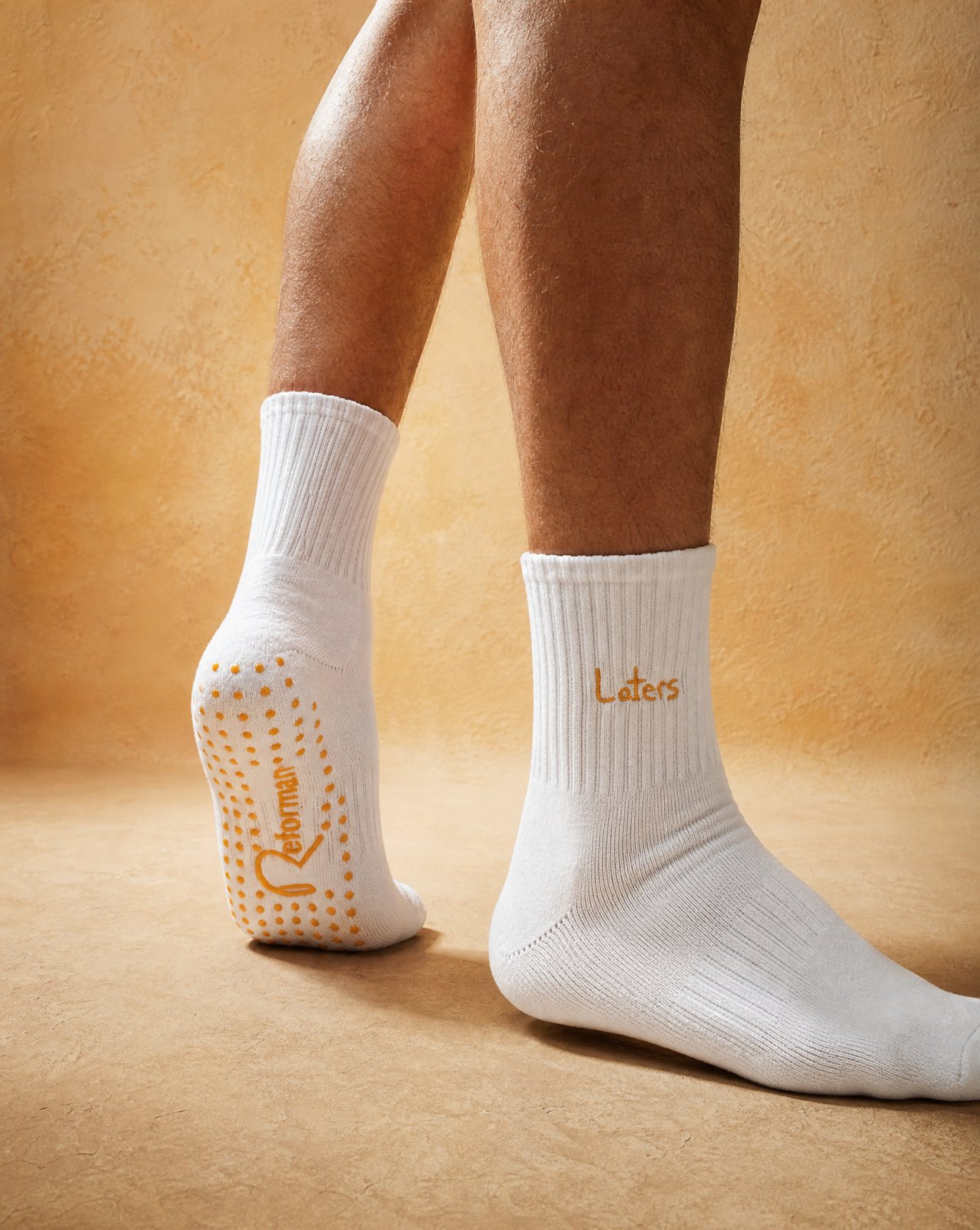
If you want a wider view of what separates a good sock from a poor one, the Chartered Society of Physiotherapy's guidance on footwear and stability is a useful starting point on why foot contact matters during exercise.
Grip Socks for Reformer Pilates: What to Look For
Grip socks for Reformer Pilates need to do three jobs: hold the foot in place on the carriage, stay flat through transitions, and survive being worn several times a week. Get any one wrong and you will feel it during the class.
Construction, Side by Side
- Grip material: both brands use silicone-based grip. The difference is placement, not chemistry. Melisoles concentrates grip at the heel and ball; Pointe Studio spreads it across a wider sole area, including the midfoot.
- Grip coverage: full-sole coverage matters more than density. A smaller number of well-placed grips across the whole sole outperforms a heavy cluster in one zone, because the midfoot has something to hold during side-to-side work.
- Toe construction: five-toe or contoured construction stops the fabric bunching under the toes during footwork. Flat-knit toes compress together and migrate.
- Cuff: a flat, wide cuff sits without digging and resists rolling. A narrow elastic cuff holds initially and loosens with washing.
- Fabric: engineered stretch across a defined size range holds shape far better than a generic stretch knit. Look for a blend that recovers after washing rather than one that stretches out.
What Twenty Washes Actually Tell You
The failure points are predictable: silicone that lifts at the edges, fabric that pills under the heel, and cuffs that lose elasticity. Wash them inside out on a cool cycle and air dry. Heat is what breaks down both the silicone and the stretch fibres, so a hot wash or a tumble dryer will shorten the life of any grip sock, regardless of brand.
Track three things across a wash cycle:
- Grip adhesion, does the silicone stay bonded at the edges, or start to lift?
- Shrinkage and stretch recovery, does the sock return to its original length, or stay stretched?
- Pilling, does the heel and ball area roughen up?
A common pattern is that grip lifts first at the heel, because that is where the most friction occurs during transitions. If the silicone is still bonded after twenty cool washes, the sock is built to last.
The Shortlist
- Full-sole silicone grip, not just heel and ball
- A flat ankle cuff that will not roll down
- Five-toe or contoured construction to stop bunching
- Fabric that recovers its shape after washing
- Enough stretch to fit your actual foot, not an averaged one
At Reforman, our grip socks are built around exactly these points: gender-neutral design, full-sole silicone grip, and five-toe construction with engineered stretch that fits feet from 5.5 to 10.5. They are designed to prevent migration, bunching and rolling at the heel, and to hold up to repeated sessions rather than a single season.
Verdict: Which Grip Socks Suit You Best
There is no single winner in the Melisoles vs Pointe Studio comparison, because the two brands suit different priorities. If you want a sock tuned to one style of training, either brand can work. If you want one pair that moves between the Reformer, the gym and daily wear, the criteria above matter more than the label.
Judge any grip sock on the same four things: full-sole coverage, honest sizing, cuff retention and wash durability. That is the whole test.
Frequently Asked Questions
Which brand has the best grip socks for Pilates?
There is no single best brand for everyone. The right grip socks depend on your foot shape, workout type and how often you train. Look for full-sole silicone coverage rather than scattered dots, a snug ankle cuff that stays put, and a fabric blend that manages moisture without losing stretch. Melisoles and Pointe Studio both offer solid options, but fit and grip pattern matter more than the label on the packaging.
How do Melisoles grip socks compare with Pointe Studio socks?
Melisoles tend to suit those who prefer a closer, second-skin fit with denser grip placement under the ball of the foot. Pointe Studio often appeals to people who want a slightly cushioned feel and more visible design choices. Neither is objectively better. If you have wider feet or train on a Reformer several times a week, prioritise grip coverage and ankle stability over aesthetic details.
Are Melisoles or Pointe Studio socks better for Reformer Pilates?
For Reformer work, the deciding factors are grip coverage across the full sole, a cuff that does not roll down during footwork, and enough stretch to stay put through transitions. Both brands address these points to varying degrees. Try one pair of each if you can, and pay attention to how they feel after twenty minutes of continuous footwork rather than in the first five.
What should you look for when choosing Pilates grip socks?
Check four things: grip pattern (full-sole coverage beats isolated dots), fit (no bunching at the toes or heel), fabric (a cotton-nylon blend with some elastane holds shape after washing), and durability (reinforced toe seams and a firm ankle cuff). Wash them inside out at low temperature and air dry to extend grip life.
Choosing grip socks is really a question of fit and grip holding up over time, not brand loyalty. Reforman makes gender-neutral Pilates grip socks with full-sole silicone grip, five-toe construction and engineered stretch from 5.5 to 10.5, built to prevent migration and bunching across the Reformer, the gym and everyday wear. Shop the collection and find the pair that suits how you train.